
Hand a trade fair visitor a VR controller and you’ll lose the first thirty seconds explaining: which button? Which trigger? Give them back their own hands instead – and they’ll get going straight away. That’s exactly why hand tracking is transforming the accessibility of immersive experiences.
The best controller is no controller
Controllers are powerful, but they’re a hurdle. They have to be explained, held, charged and disinfected. Above all, though, they stand between people and the experience. Hand tracking removes that layer: the headset’s cameras recognise hands and fingers in real time, and you grab, point and press just as you would in real life. No instructions needed.
Why this is crucial at trade fairs
At a trade fair, every second counts. An experience that needs a minute of introduction loses half its visitors. An experience that everyone understands instantly – grandfathers and digital natives alike – draws a queue. Hand tracking turns “How does this work?” into “Ah, that’s how!” in under five seconds.
The next step: touching real objects
Hand tracking on its own is intuitive, but something is missing: the sense of touch. When you grab at thin air, you feel nothing. That’s why, in mixed reality, we go one step further and integrate real physical objects. A real push button that you actually press and whose click you can feel – while the effect plays out in the virtual world.
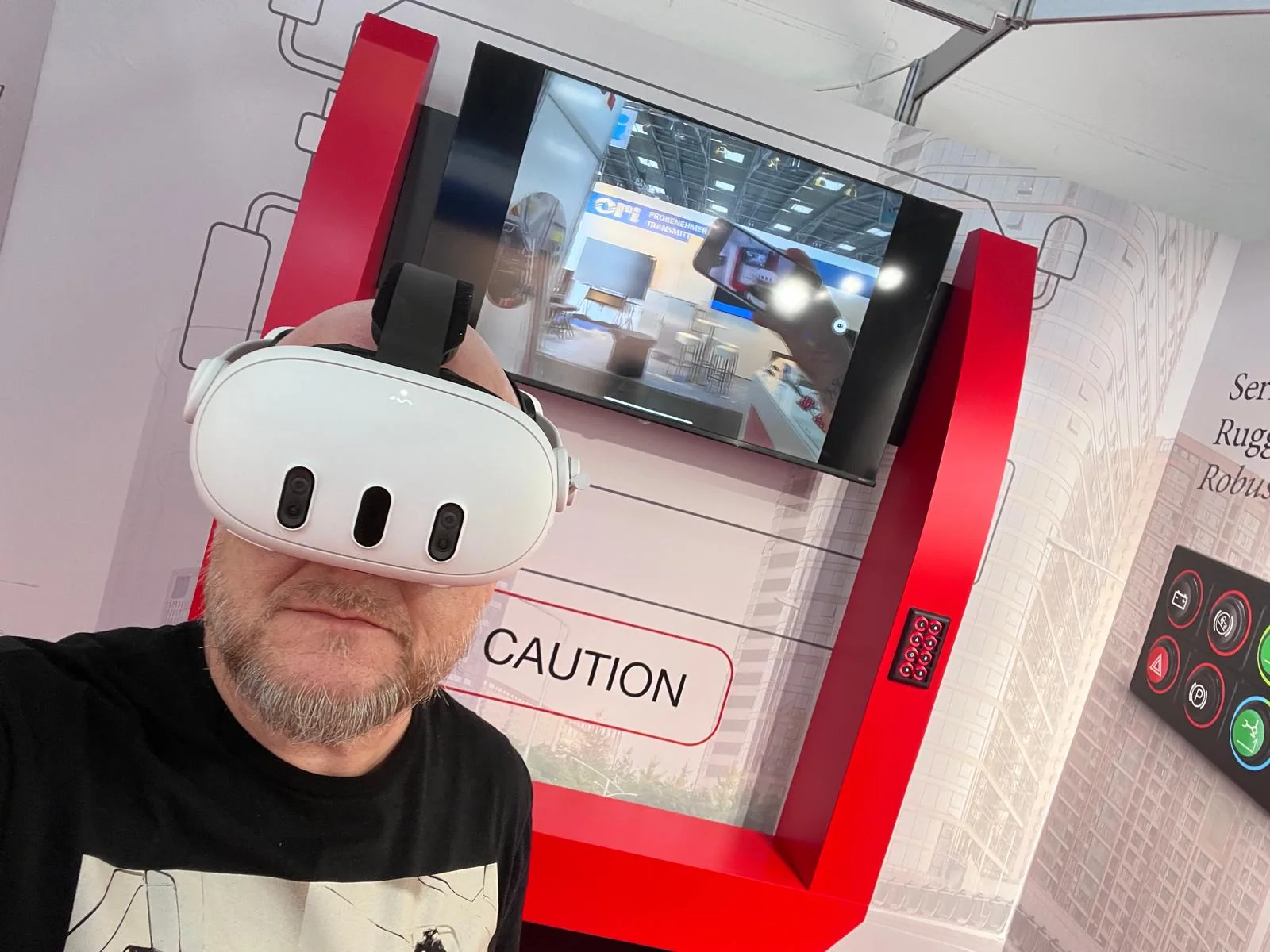
In our project for EAO, visitors press the real push buttons of a control station and see in mixed reality how a tractor or refuse truck responds. It brings together the best of both worlds: the intuitiveness of your own hands and the tactile feel of the real, paired with the limitless freedom of the virtual.
Immersion doesn’t come from putting more technology in front of people’s eyes, but from closing the distance between people and the experience.
What really matters
- Keep gestures to a minimum: A few clear interactions beat lots of clever ones.
- Provide feedback: Visual or haptic feedback confirms every action.
- Bring in the physical: Where it counts, a real button beats any virtual menu.
- Design for everyone: The experience has to work without words.
The technology becomes invisible, and the experience takes centre stage. That’s exactly how it should be. Find out more on our page about Mixed Reality Experiences.