
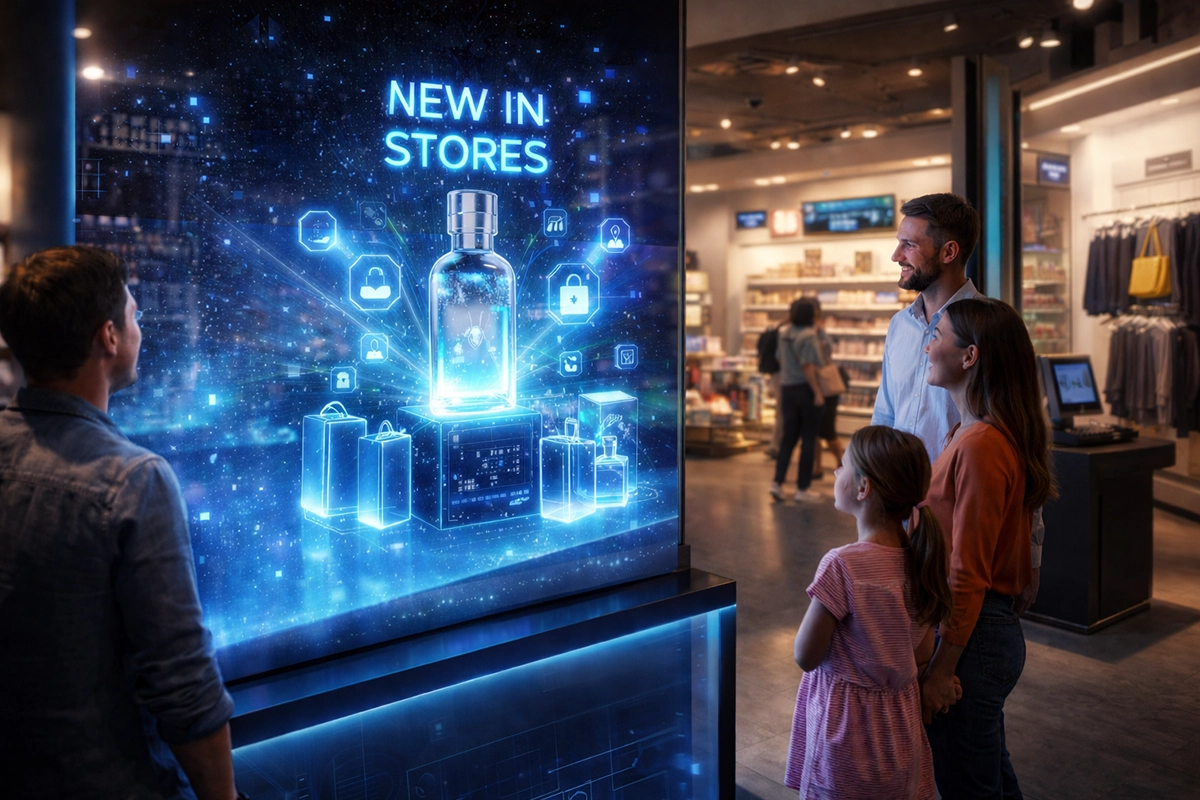
Immersive experiences draw people into a subject – engaging several senses at once, with a spatial, true-to-life effect. Instead of merely reading or seeing information, people experience it. That speaks to the emotions, and content that triggers emotions is processed better and remembered for longer. This is what makes immersive experiences valuable in so many different fields.
Marketing & Sales
Typical settings: Trade fairs, events, points of sale, showrooms, field sales meetings with customers, the web
What’s possible:
- Showcase products and brands in three dimensions, for example as a hologram or in a virtual environment
- Make complex or large products easy to understand, even when they can’t be shown on site
- Actively involve visitors, for example with configurators or by letting them ask an AI avatar questions
- Create brand worlds that people can step into and explore
The benefit: Experiences attract attention and keep people around for longer. Anyone who explores a product for themselves understands it better – which makes conversations and decisions easier.
Entertainment
Typical settings: Shows, events, exhibitions, leisure attractions
What’s possible:
- Shows that combine a real stage with digital effects
- Hologram appearances by characters or real people
- Games and experiences in mixed reality
- Interactive stations in exhibitions and museums
The benefit: Shared wow moments stick in the memory and get talked about. Content can be conveyed in a way that reaches even young audiences or people with no specialist background.
Training & Education
Typical settings: Schools, vocational training, industry, companies
What’s possible:
- Bring occupations and working environments to life
- Practise safety procedures under realistic conditions
- Train on procedures and processes step by step
- Learn to operate machinery before standing in front of the real equipment
The benefit: Anything that would be expensive, complex or dangerous in reality can be practised safely, as often as needed. Learning by doing boosts understanding and retention.
Therapy & Medicine
Typical settings: Clinics, medical practices, hospitals, rehabilitation
What’s possible:
- Relaxation and meditation in calm virtual environments
- Exposure exercises for anxieties in a safe setting
- Distraction and motivation in rehabilitation and pain therapy
- Supporting mental health
The benefit: Realistic yet controlled environments can be precisely dosed and repeated. This can complement therapies and give patients an extra boost of motivation.
Other fields of application
Immersive technologies can be used wherever content needs to be understood, remembered or experienced – from internal communications and general meetings to public information. What matters is not the technology but the goal: what should the audience know, feel or do by the end? If you’d like to see real-world examples, you’ll find them among our projects.