
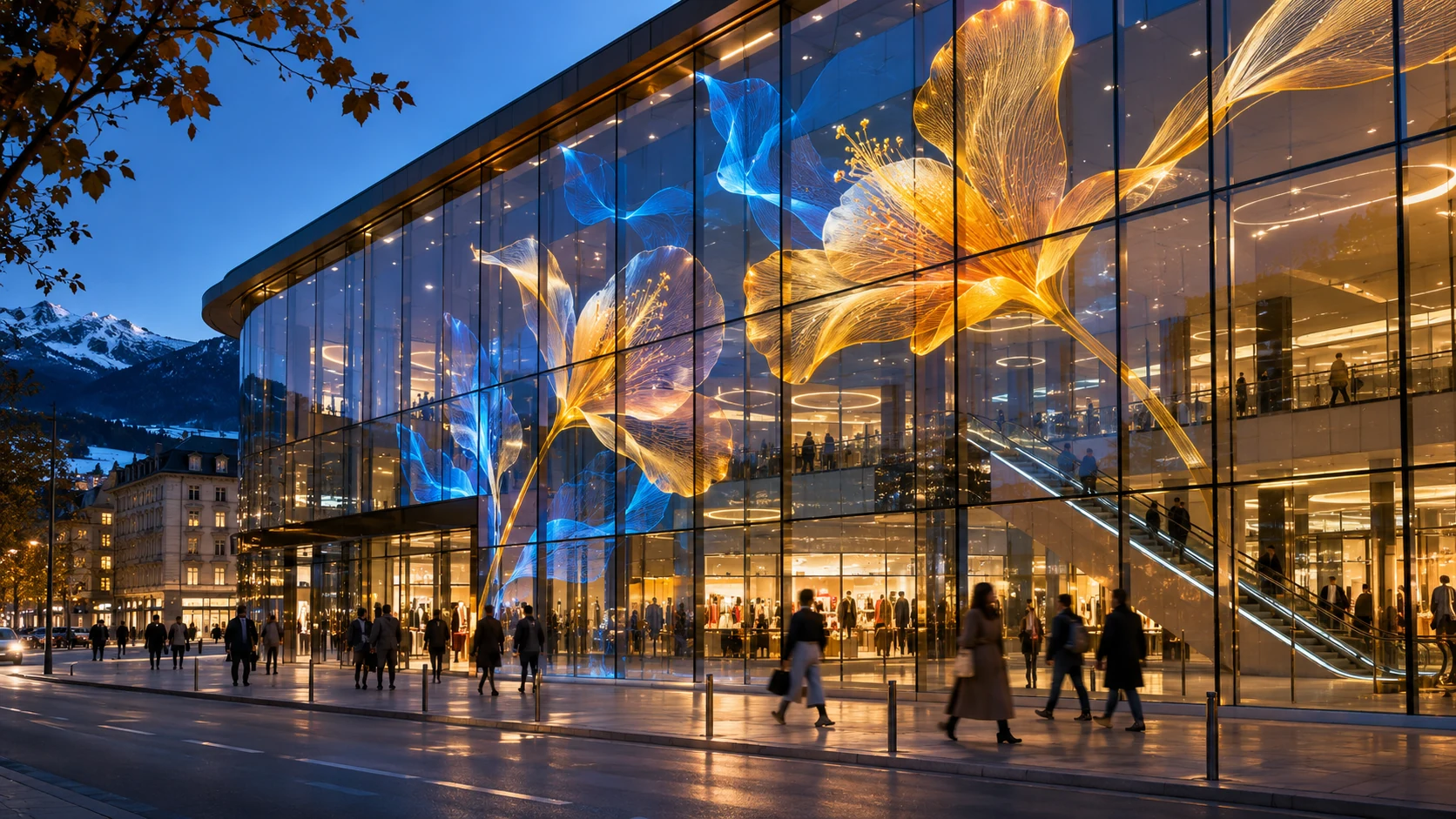
A flower unfurls across a shop window. Ripples spread out beneath visitors’ feet. Above them, a whale glides through a digital underwater world. And on stage, a new product is unveiled against a vast LED landscape.
LED technology, interactive applications, 3D content and immersive storytelling are now creating experiences that show products from entirely new perspectives. The possibilities range from a compact product display case to an entire experience space.
Immersive product staging connects real objects and places with digital content. It can capture attention, make complex features easy to understand and invite people to discover a brand for themselves. The right solution depends on the story you want to tell.
In this article: Transparent LED · LED walls · LED ceilings · Interactive floors · Product display cases · Holograms · 3D and XR · AI avatars · Research
01 · Transparent LED shop windows
When glass tells stories
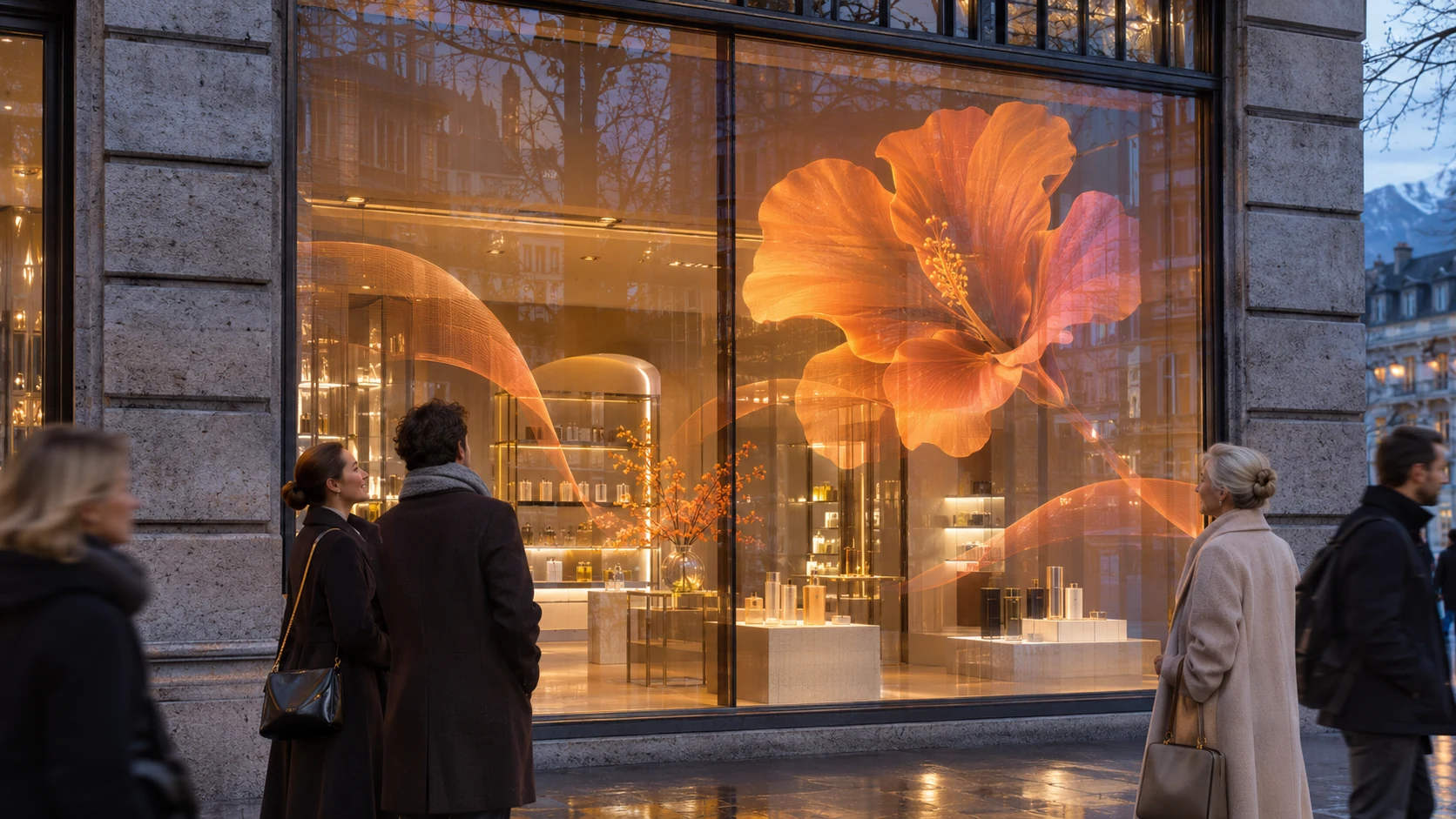
A shop window is often the first moment of contact between a brand and the people passing by. Imagine a flower slowly unfurling across the glass, while the view into the shop remains clear. A fragrance, a collection or a new product gains a story before anyone has even stepped inside.
Transparent LED films display digital content directly on the glass. Transparent LED mesh systems can be mounted behind the pane; against a dark background, their image can appear to float in mid-air. How transparent and bright a solution looks depends on the system, the visual and the lighting conditions.
An idea: A perfume brand lets a digital flower blossom on its shop window. In the shop behind it, the fragrance stands on an illuminated plinth – the first visual impression leads straight to the real product.
02 · Transparent LED glass doors
The entrance becomes part of the story
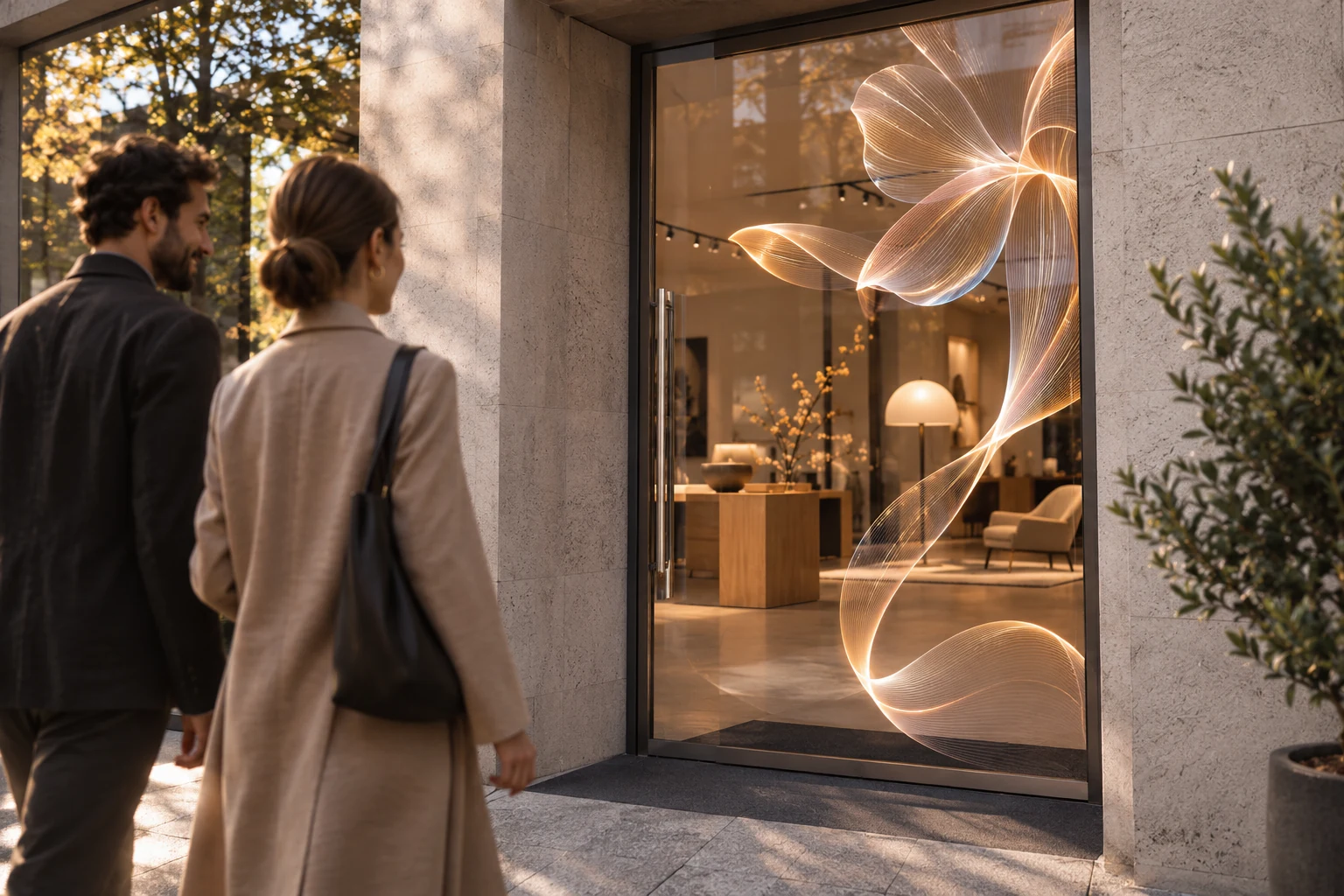
The story can continue from the shop window to the entrance. Delicate lines of light greet guests on a glass door; a motif appears on a partition and resurfaces later in the space. Visitors get a feel for the brand the moment they arrive.
Transparent surfaces are ideal for showrooms, shops, reception areas and exhibitions. With moving doors, factors such as power and data routing, visibility, safety and the suitability of the glazing need to be checked on site.
An idea: Lines on the entrance door join up to form a shape. Inside, the wall and the product display case pick up the same movement – an inviting opening that guides visitors through the space.
03 · LED walls and stages
The big stage for your brand
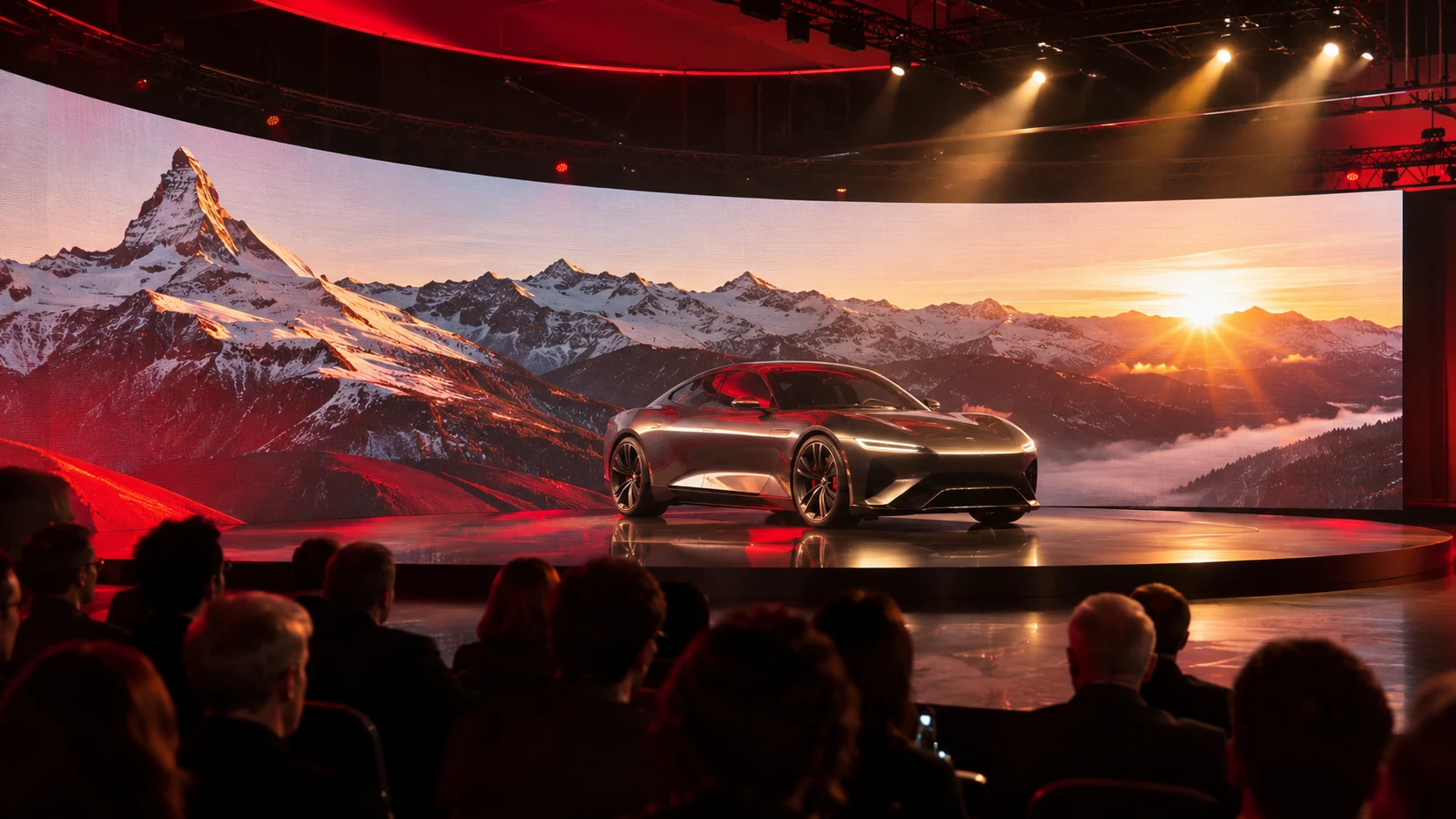
The lights dim. A vehicle stands on stage, and behind it a mountain landscape opens up in the first light of morning. An LED wall can turn a product moment into a shared story – for a small audience in a showroom or for a major launch.
Large-format LED surfaces show films, live footage, animations and 3D content. They can be flat, curved or extend across several surfaces. Outdoors, suitable weatherproof systems or mobile LED trailers are an option. Viewing distance, brightness and content determine the right solution.
An idea: As a vehicle is unveiled, the backdrop shifts from the city to the mountains. Light and sound follow the visuals, while the real product on stage remains the centre of attention.
From our projects: Immersive board keynote at the Estrel Berlin, Immersive 3D award show at The Hall
04 · LED ceilings
Look up, and another world begins
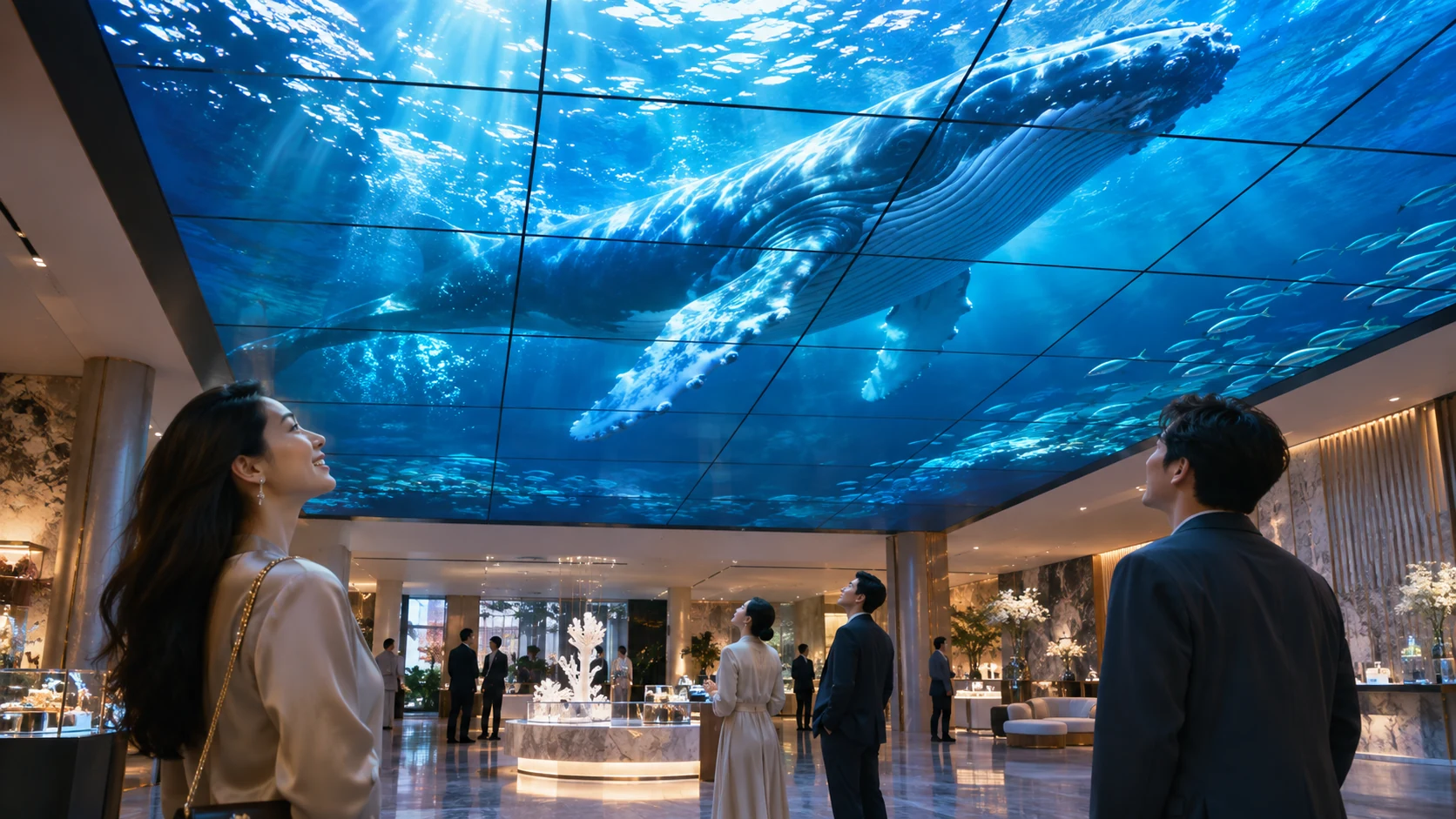
Above the guests’ heads, a whale glides through blue water. In another room, clouds drift past or a night sky glows above a product presentation. An LED ceiling extends the stage upwards and can transform a space the moment people walk in.
The surface can create a calm atmosphere or be part of a bigger story. For implementation, aspects such as the supporting structure, room height, lighting and access for maintenance need to be clarified.
An idea: A travel company welcomes guests beneath a slowly changing sky. As the evening goes on, it turns into a canopy of stars – and a reception room becomes the start of a journey.
05 · Interactive LED floors
One step transforms the space
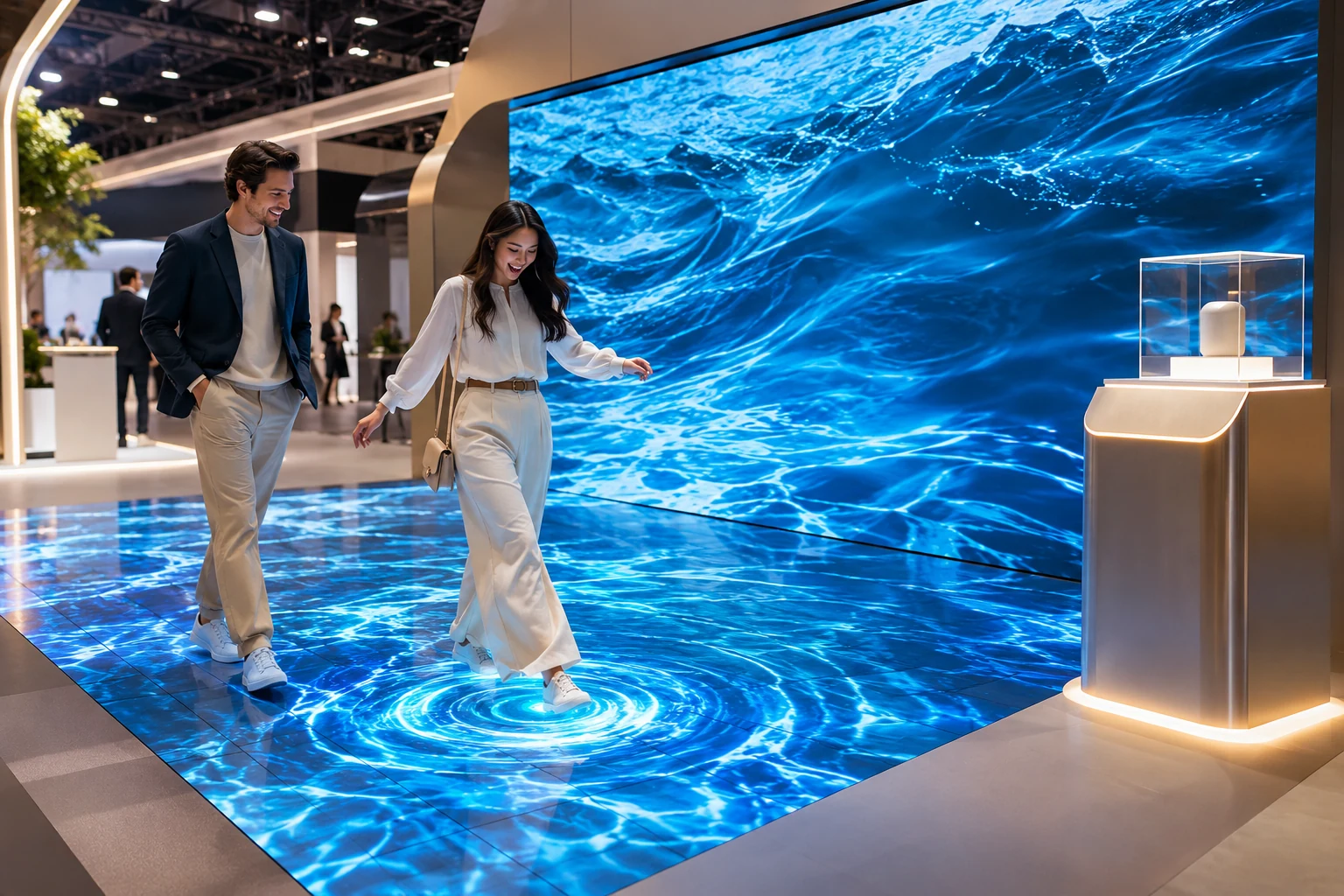
A visitor sets foot on the floor and ripples spread out beneath her. With the next step, the image changes again. When a surface responds to people, simply looking becomes a playful experience.
Sensors and a suitable application can detect steps or movements and trigger digital effects. Connect the floor to an LED wall, and the visual world can continue across both surfaces. This requires a walk-on system and site-specific planning of the substructure, load capacity and safety.
An idea: A cosmetics brand tells the story of where an ingredient comes from: water and plant shapes accompany visitors all the way to the product display case.
06 · LED furniture and counters
The conversation starts at a digital surface
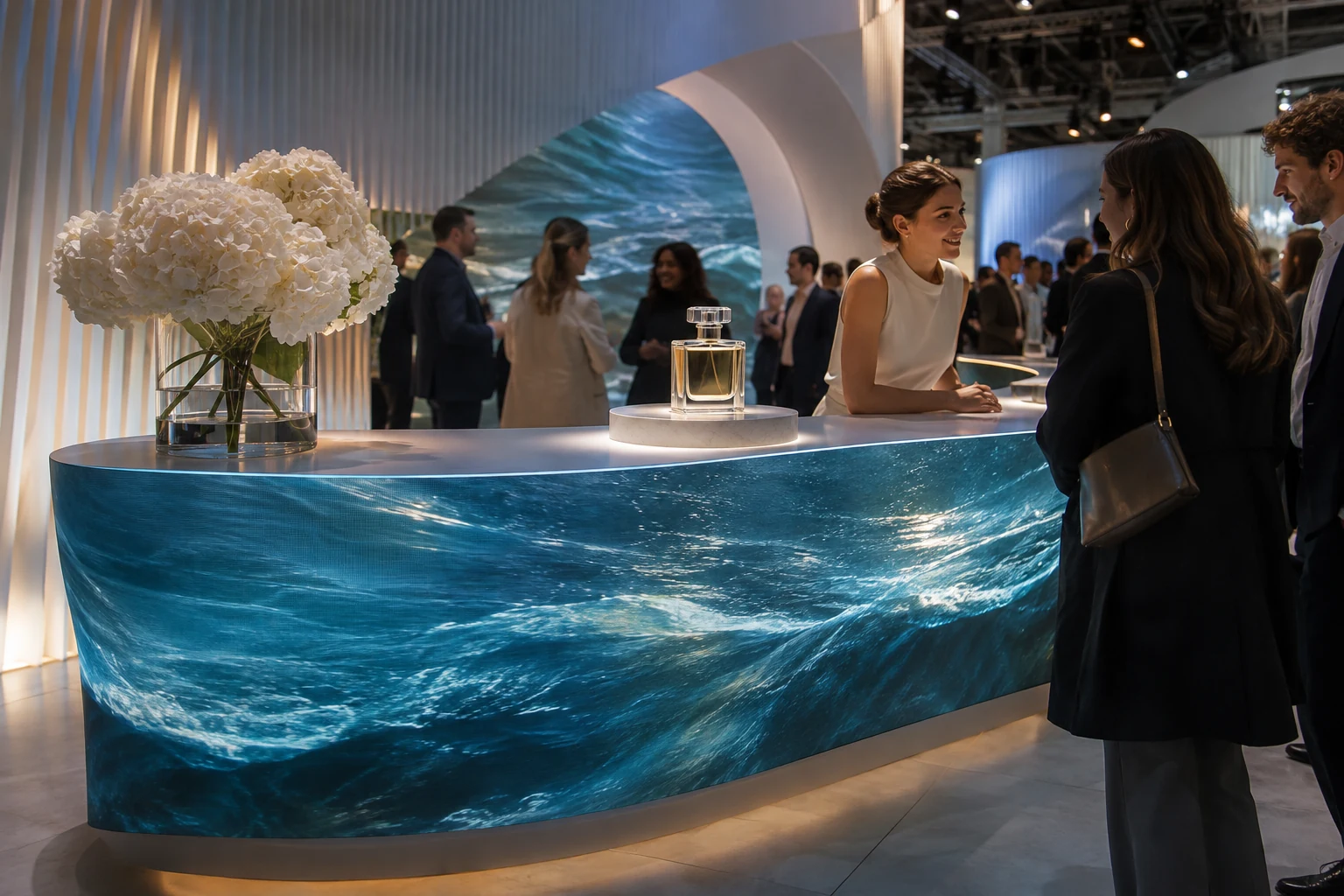
The first personal contact often happens at a counter. When its surfaces carry digital content, it can also extend the visual world of the trade fair stand – from the large LED wall right through to a conversation about a product.
LED counters and tables can display a campaign’s animations, colours or moods, for example. Depending on the piece of furniture, both front and side panels can be used. Mobile solutions are also available for temporary events.
An idea: A calm water surface ripples across the front of the counter. A fragrance stands on top; in the background, the landscape continues.
07 · Transparent product display cases
The real product meets digital content
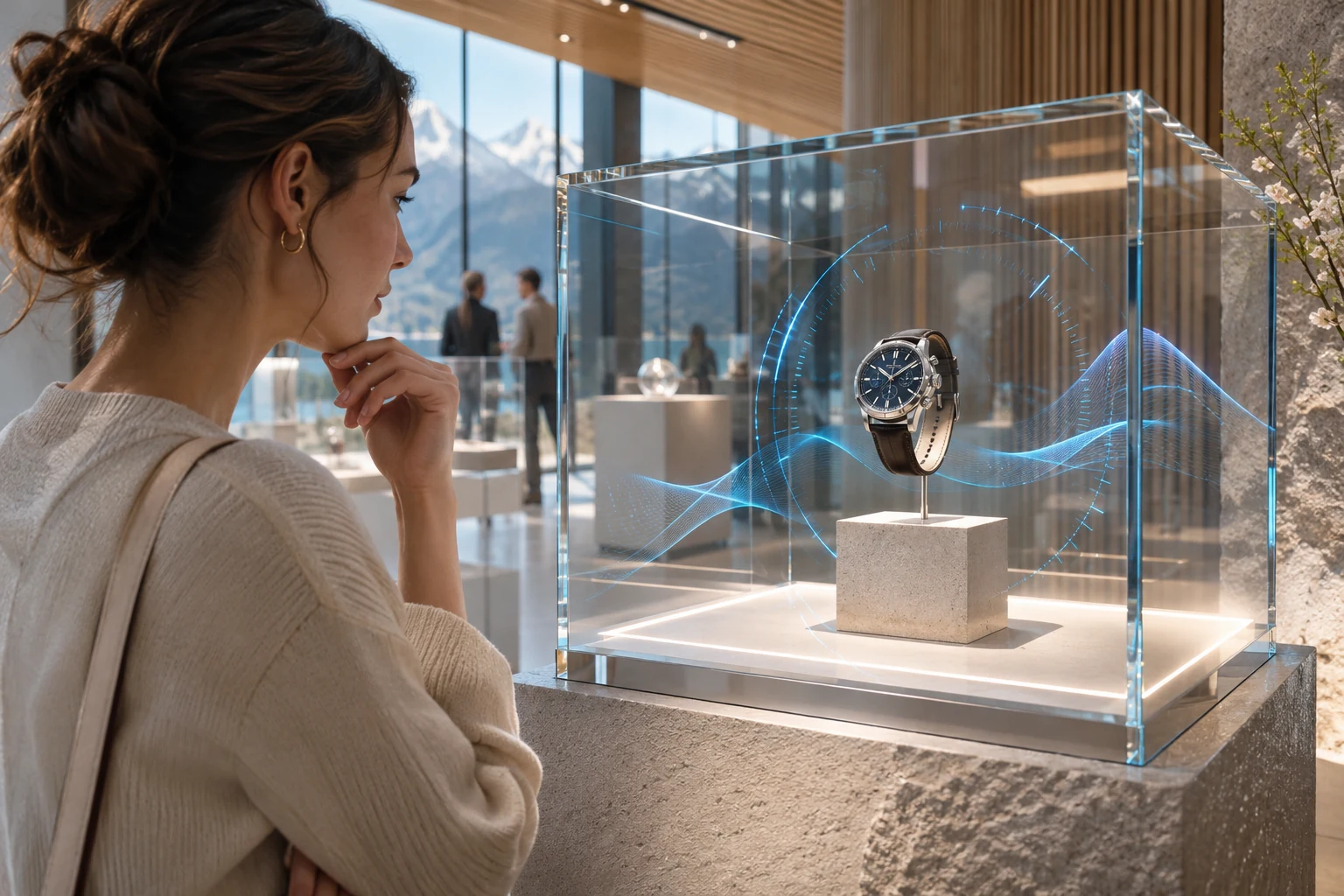
A watch sits in a display case. In front of it, a delicate digital layer appears, explaining the materials and details of the movement. The original remains visible; the digital display reveals what would otherwise be hard to see.
Transparent displays can combine real objects with animations, information and – depending on the application – interactive content. Transparent LED, OLED and MicroLED systems differ in aspects such as brightness, transparency, size and suitable environment. The choice depends on the product and the viewing situation.
Our Holo-Box Touch combines a physical object with digital content on a transparent display – in use for clients including the Swiss Farmers’ Union and V-ZUG.
From our projects: Holo-Box with brand ambassador at Olma and BEA
08 · Hologram effects
The product appears to float
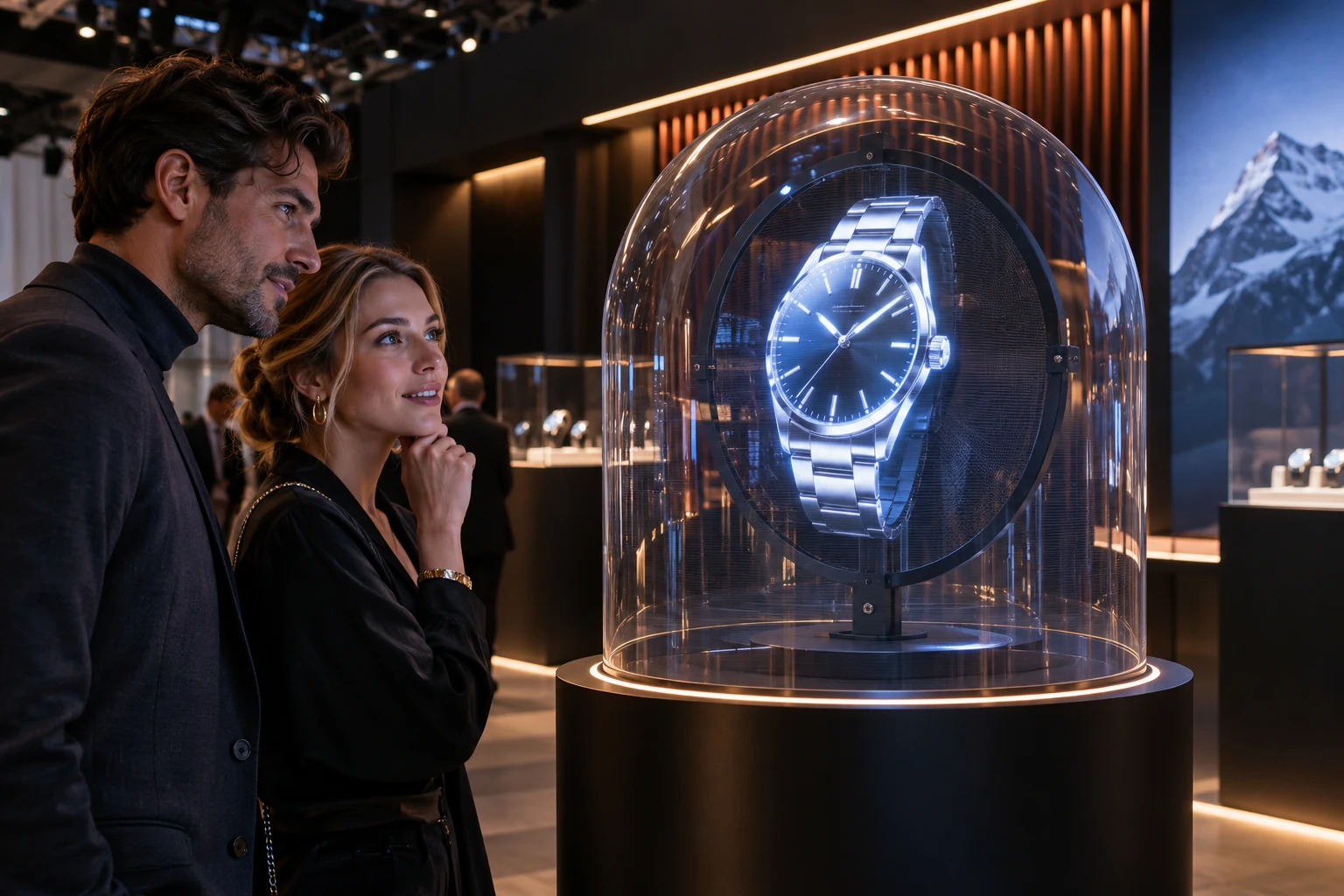
A watch seems to rotate in mid-air. A component opens up to reveal its inner workings. A brand ambassador appears life-size on stage. Hologram effects give digital content a spatial quality and can create a truly special moment.
In everyday language, a variety of techniques are referred to as holograms. LED rotors, for example, use fast-moving LEDs to create an image that seems to float. Other installations rely on transparent displays or projections onto special gauze screens. Image quality, lighting requirements and viewing angles depend on the system. Discover hologram experiences by jAMAZE
An idea: A small industrial component is shown as a large digital visualisation, breaks down into its individual parts and explains how it works. With rotating systems, appropriate protective and safety measures are part of the planning.
In practice: For Bucherer, we staged a hologram in the pop-up store at Zurich Airport.
From our projects: Hologram fairy at the point of sale for Globus, Hologram wall at BAU Munich, Hologram wall for Volvo at Auto Zürich
09 · Interactive 3D applications
Complexity becomes an experience
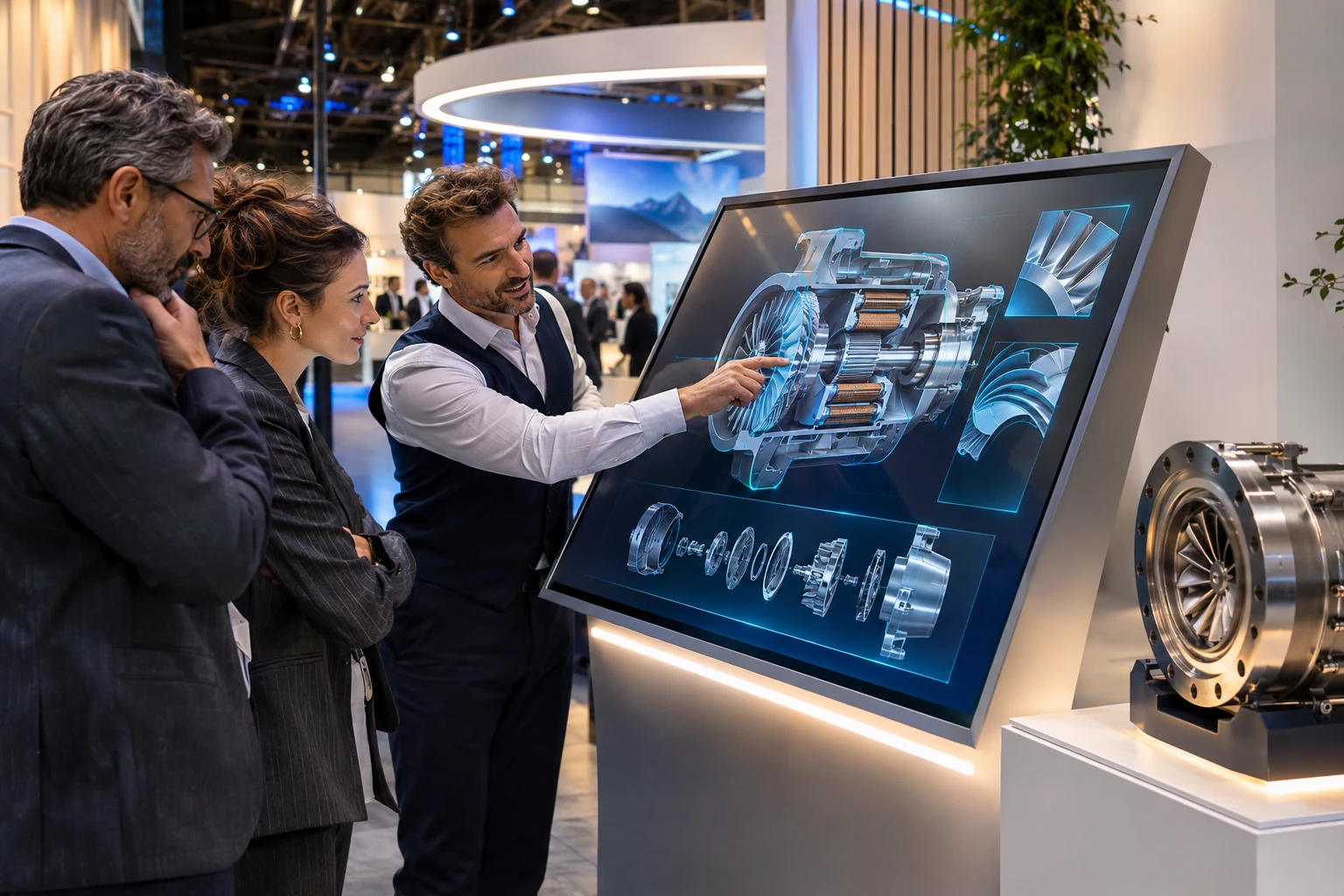
A machine may be too big for a trade fair stand. Its most important functions may be hidden inside. An interactive 3D application makes it accessible all the same: visitors rotate the model, select components and discover how everything fits together at their own pace.
Configurators show variants, exploded views reveal components and animations explain processes. Existing CAD or 3D data can serve as a basis; depending on the starting point, it is optimised to create a smooth, easy-to-understand application.
An idea: During a sales conversation, a visitor taps on a machine part and instantly sees how it works within the overall system. The digital display supports the personal conversation.
From our projects: Touch application with machine configurator for Gallus, Virtual furniture showroom for Novex · More on interactive experiences
10 · Augmented, virtual and mixed reality
Experience products in new worlds
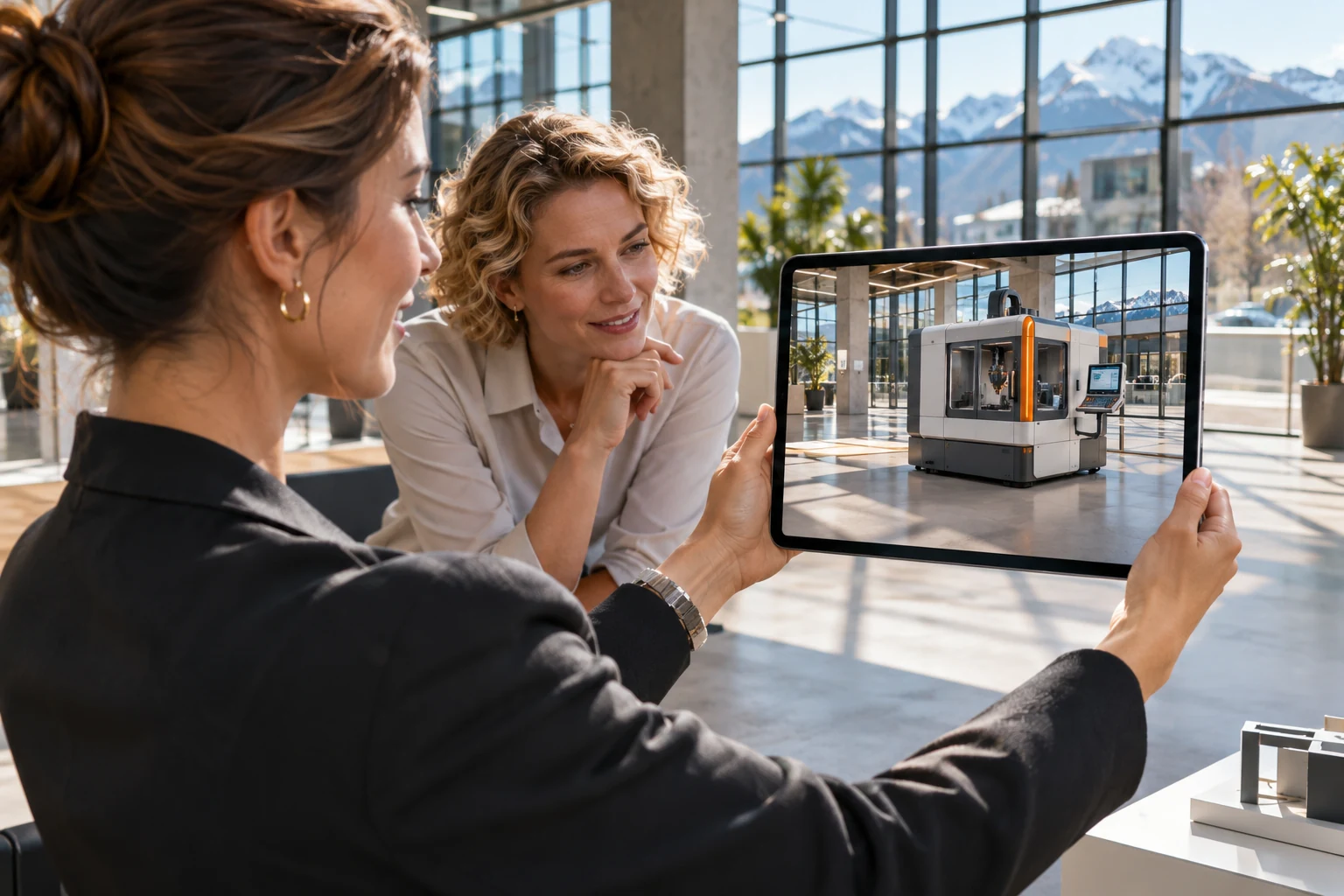
How will a machine look at its intended location? What does a product look like in a different version? Augmented reality (AR) enhances the real environment with digital content – on a smartphone or tablet, for example.
Virtual reality (VR) uses a headset to transport people into a fully digital environment. Visitors can step into a virtual showroom or explore a place that is difficult to access physically. Mixed reality (MR) combines real and digital elements in a shared environment.
An idea: A manufacturer presents a new machine as a digital model even before it is delivered. The audience views it in its spatial context and discovers selected features.
With headsets, comfort, supervision and accessibility are part of the concept. A screen-based alternative means people can join in without a headset, too.
From our projects: AR application at IDS Cologne, Mixed reality tractor at Agritechnica, VR wind turbine simulator at EMO · More on mixed reality and VR
11 · AI avatars
A brand starts a conversation
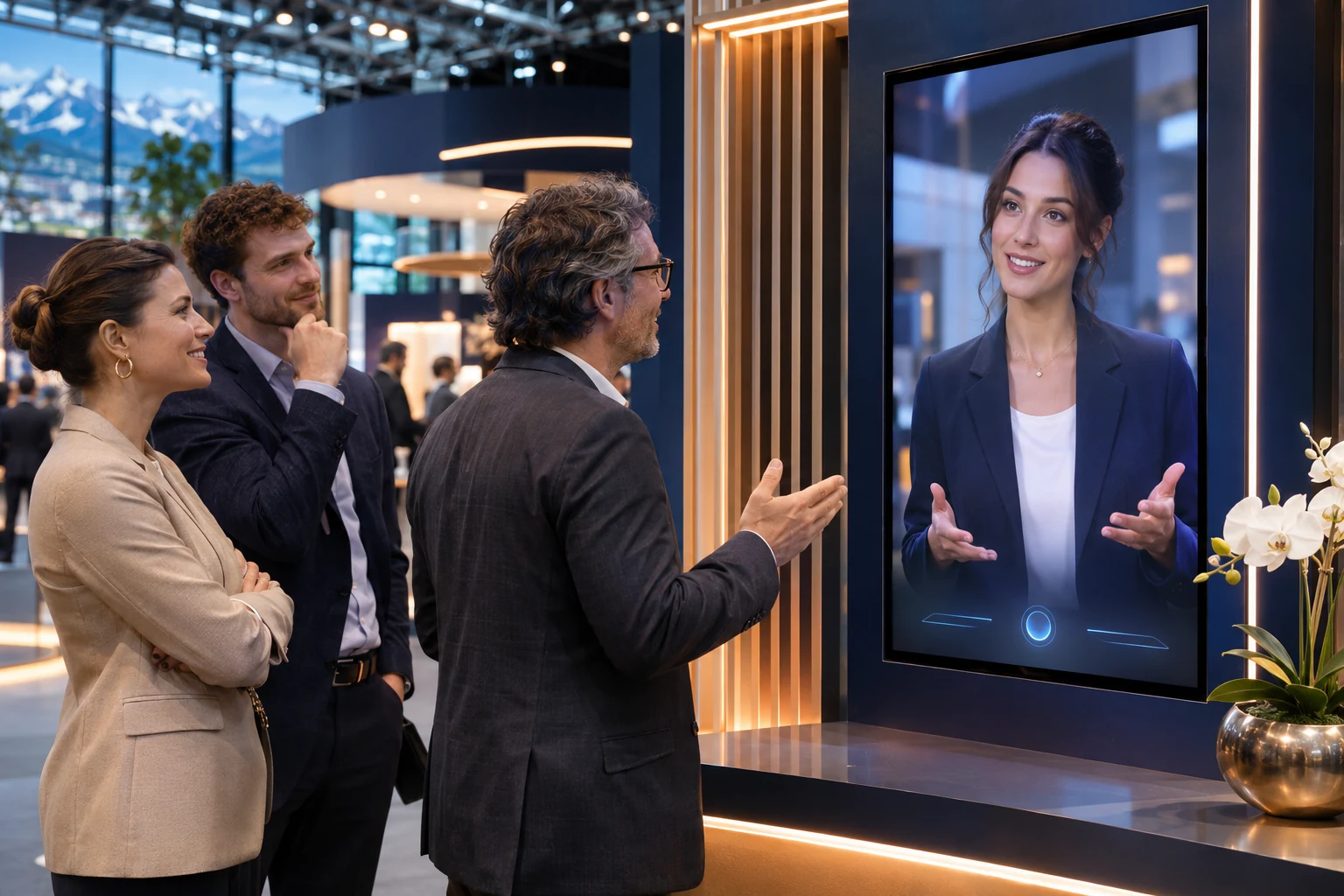
A visitor stops in front of a digital product expert and asks a question. The avatar answers, explains a product line and, if needed, refers her to a real contact person. A visual presentation turns into a dialogue.
AI avatars can appear on screens, in digital worlds or in hologram-like installations. A reliable experience requires well-maintained information, tested answers, clear boundaries and responsible handling of data.
In practice: For EAO, our AI avatar “Nova” at InnoTrans was on duty as a product expert. More about AI avatars
From our projects: AI avatar “Myra” at Europa-Park, AI avatar “Tom” at BAU
12 · Projection mapping and immersive spaces
A story you can step into
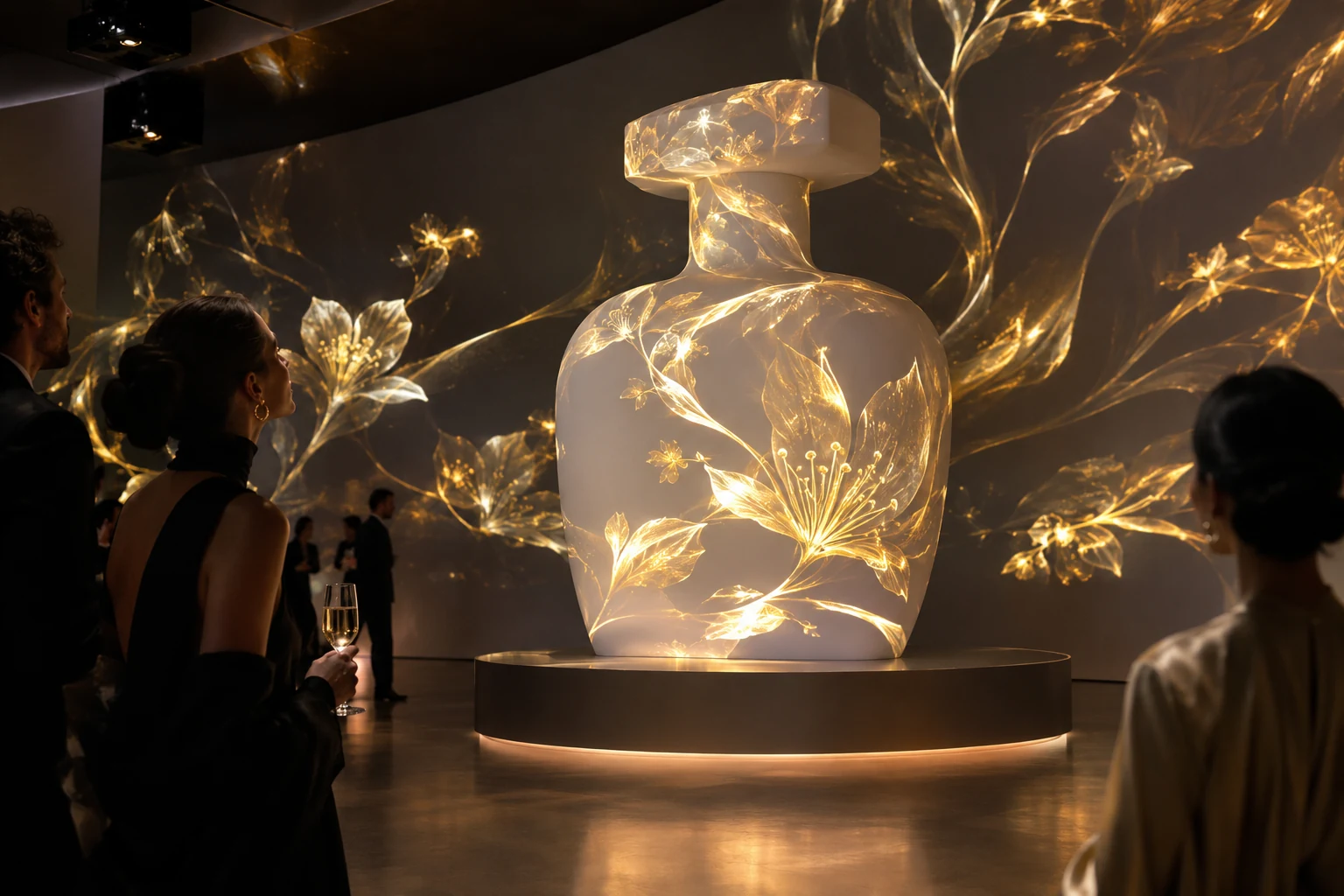
Golden shapes travel across a bottle and continue onto the wall. An object changes its appearance without losing its form. In projection mapping, content is tailored to the geometry of a surface or object.
Combined with light and sound, projections can transform a space into a story you can walk through. Many people experience the show at the same time – at a launch, in an exhibition or as the highlight of an event.
An idea: Visitors follow the making of a product through the space: from the materials and manufacturing to the finished object, which takes centre stage at the end.
From our projects: Immersive event video at Aura Zurich, Immersive 3D show at the Verkehrshaus · More on immersive shows
Research and practice
What does the research say?
Immersive product presentations are not just visually exciting. For several years now, marketing research has been examining how spatial and interactive presentations influence perception and decision-making.
Reviews of 3D, AR and VR product presentations suggest that such formats are, on average, received more positively than conventional images or videos – with marked differences depending on the application. Augmented reality tends to be associated with concrete actions such as trying out a product, while virtual reality is linked more to intense engagement. Privacy concerns and perceived risks, on the other hand, can detract from the experience.
Findings like these offer guidance but do not guarantee specific sales figures. Nor can insights from e-commerce simply be transferred to physical installations. A pilot project with suitable success metrics helps you assess your own use case.
From idea to implementation
Which solution suits your project?
A transparent shop window can spark interest out on the street. An LED wall creates a shared stage. A product display case connects a real object with information. An interactive 3D model helps explain complex features. And an AI avatar opens up an additional way to start a conversation.
Things get really exciting when several elements work together: the shop window arouses curiosity, the glass door picks up the motif, and inside, a digital visual world leads to the product presentation. Each touchpoint plays its own distinct role.
Planning starts with the audience and the objective. Then come the space, content and technology: What story should be told? What product data is available? How are lighting, power, access and operation organised? And how can you tell whether the staging is working?
What story does your product tell?
Whether it’s a trade fair stand, a showroom or a product launch: together, we’ll work out how your brand can surprise people and make products easy to understand. In our showroom in Bischofszell, you can experience selected immersive technologies live. Discuss your project with us →
Editorial note: The images in this article are AI-generated concept visualisations and do not depict completed client projects. The technologies described illustrate market and design possibilities; the specific implementation depends on the project.